

In my work, I try hard to write, do, and research things that feel relatively evergreen, or advance the conversation on AI/technology in ways that feel meaningful. I’m happy to say that I feel fairly good with my 2025 efforts in this direction!
The following five blog posts, essays, and articles summarize my primary intellectual output of last year. At the time I finish each thing, I usually feel Done with thinking about that topic for the foreseeable future and just want to throw it off like a curse and run into the next thing. Which is an instinct I’d like to combat because much of the impact comes from dissemination — and, honestly, I am pretty proud of each of these work-products and think they are interesting/valuable, so I’d like to share them with you:
One of the most valuable approaches to work I can have as a researcher at Anthropic is to do things that can help other researchers work on important problems. In this paper I used our privacy preserving analytics tool to find the values expressed by Claude in hundreds of thousands of real world conversations, how frequently they show up, and what contexts they appear in. We taxonomized and open-sourced all the 3k+ values found with their corresponding frequencies in Claude. Looking through the values taxonomy was honestly really interesting to me. My hope is that people leverage this work to better answer the question of, how do AI systems behave and how do we characterize that concisely — in other words, what does a “model fingerprint” look like? Can we build more ecologically valid evaluations by understanding the distribution of real-world values?
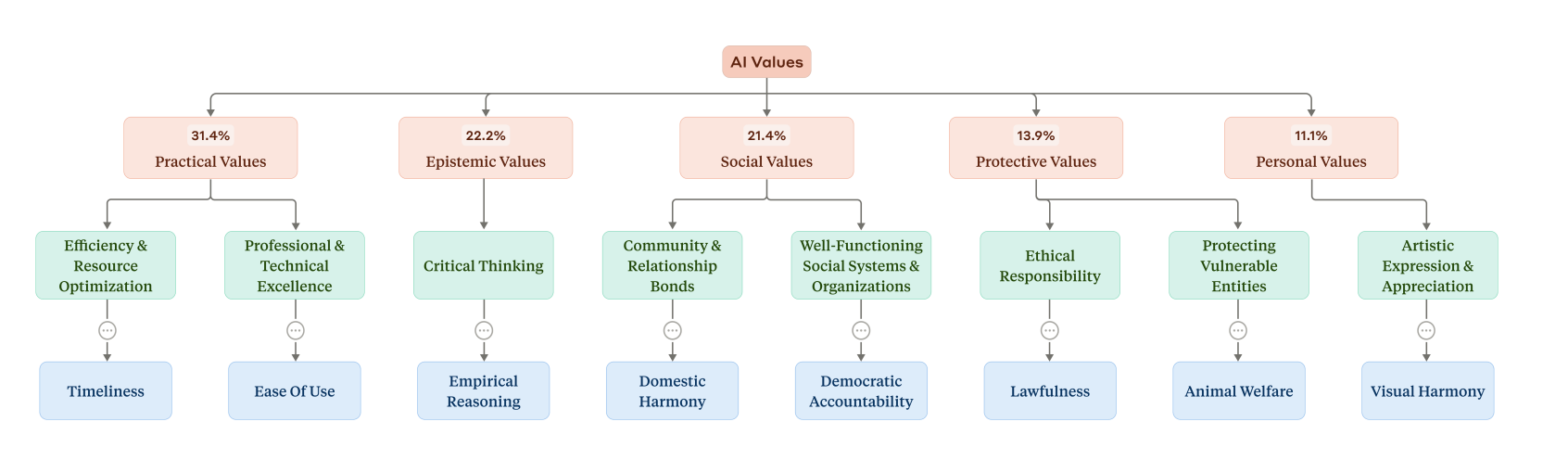
For a while this dataset was trending #1 on HuggingFace. It was also fun to go to COLM in Montreal—my first time in that city not in -20C weather—to present this paper.
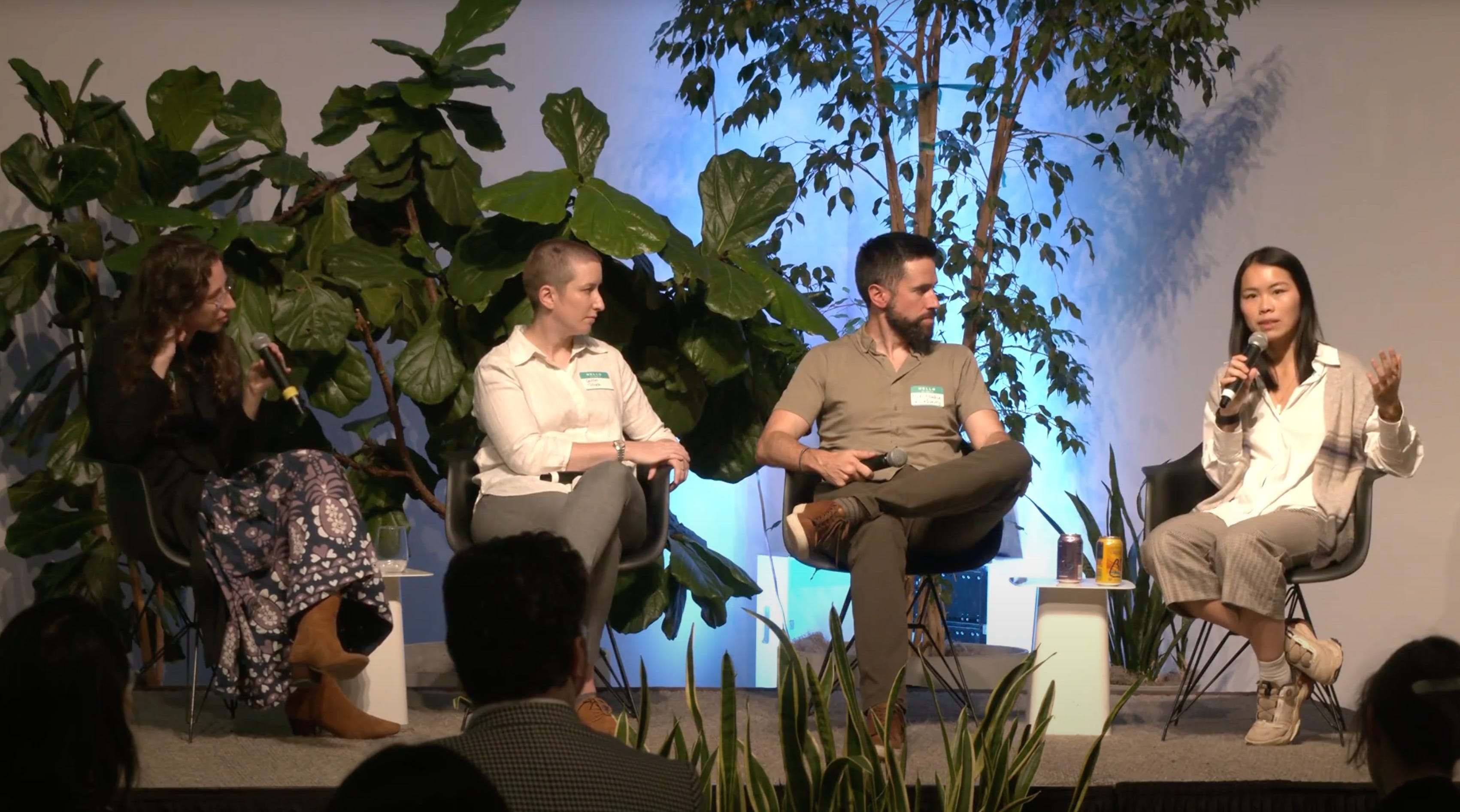
What are actually viable answers to the question of potential AI-driven mass unemployment? I wrote this with Sam Manning because I felt that UBI, the oft-touted immediate reply to this question, doesn’t take questions of power and politics seriously enough — instead, we need something more like universal basic capital (UBC) for AI. I talked about this piece at an Asterisk x GiveDirectly panel moderated by Kelsey Piper in October, which was fun! It’s always a bit hard to tell what your influence on the zeitgeist is, but I do feel like since I wrote this I have noticed more people talking about how we need other solutions beyond UBI, or at least that naive UBI will not do. This makes me happy.
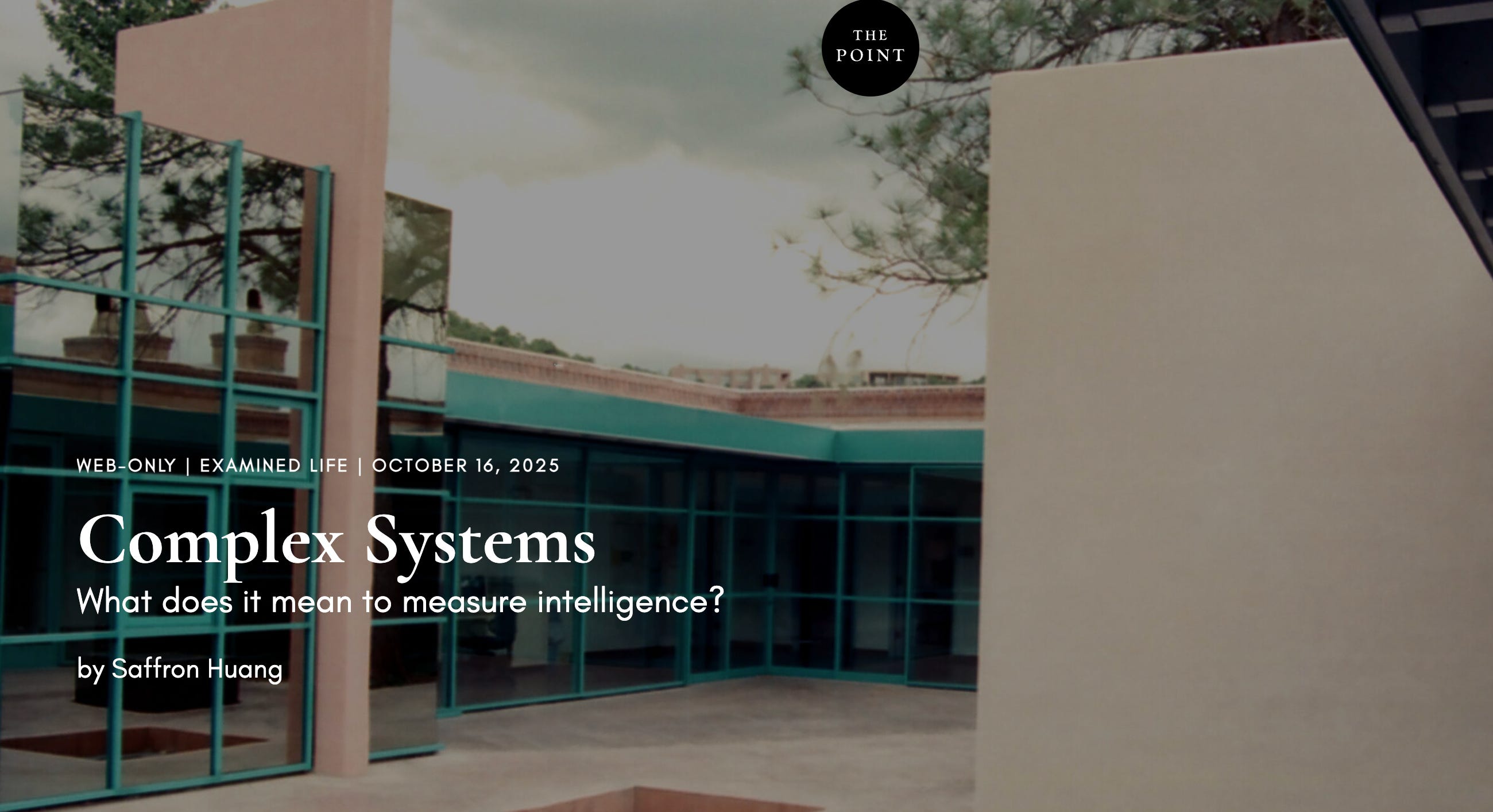
I wrote this essay after entering an existential spiral about what we can robustly evaluate about AI systems, if anything. I’m obsessed with figuring out where the line is between what we can and can’t know. Possibly because I am an Enneagram 5 or whatever (but more likely because this is my job).
I question: can we really build evaluations or metrics for any of the dimensions of AI systems we truly care about? For example: I think there is no once-and-for-all evaluation for consciousness; we would just never know for sure if AI was. And what is intelligence, anyway? We seem to not have any robust evals for that, even for human beings, so how can we presume to have such a thing for AIs? In a similar way, many of the other dimensions we care about are extremely qualitative, and it is just hard to build something that looks like a canonical ML benchmark for such things. We’ll have to get more creative than that
The essay is set against the backdrop of a Santa Fe Institute workshop I went to in March 2025 — if you’re in that part of the world, I highly recommend Chokola in Taos, and the George O’Keeffe house tour in Abiquiú.
The goal of my team (the Societal Impacts team at Anthropic) is to inject evidence into the conversation about AI’s impact on society. (Here’s a recent profile in The Verge of our team, in which the reporter laments not being able to see the tungsten cube on my desk… sorry!) We ask and answer questions like: are people falling in love with Claude? How much is cheating a problem among students? What do the economic impacts of Claude actually look like? How fast is it all moving? etc. Thus — given the burgeoning conversation around AI and jobs, I’m happy to have characterized, via both qualitative and quantitative methods, what it actually looks like for AI to be transforming SWE jobs at Anthropic. People are becoming more full-stack, building more nice-to-haves, directing a smaller share of their questions towards colleagues, feeling existential, etc. I’m particularly intrigued by the burgeoning delegation patterns, how people are noticing their social worlds at work changing, and in understanding what net-new work is done by Claude (vs. ‘just’ doing existing work faster).
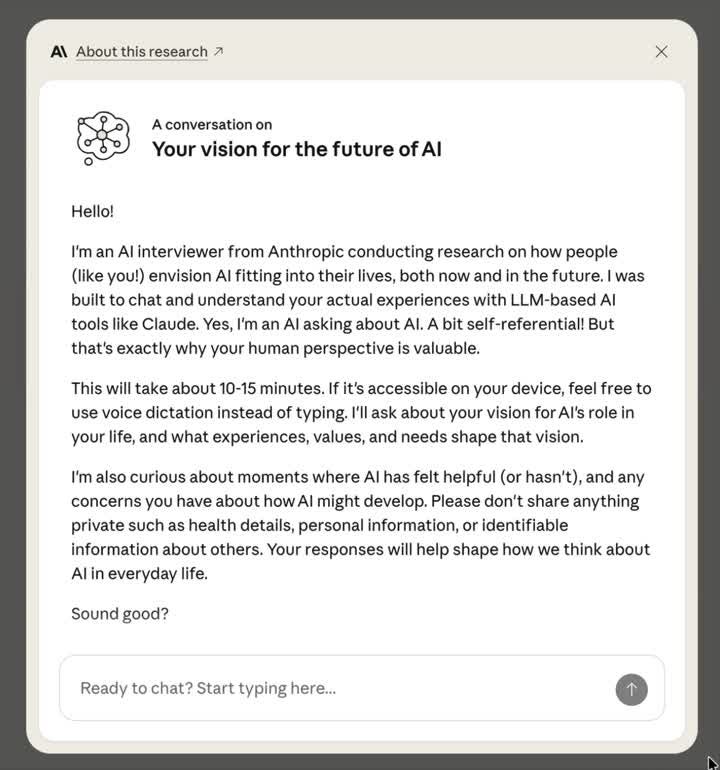
My team built a version of Claude to interview people, so that we can do qualitative interviews at scale. There are so many reasons to build such a thing: one is to gather better data on AI’s societal impacts (much cannot be gleaned from the textual content of chat transcripts). Another reason is to do with a longstanding interest of mine in understanding, and hopefully improving, how we live together as a society. Living well alongside others entails finding ways to coordinate, cooperate, and communicate with them — in what ways do we do this well or not, and how can we do this better? Much of my impetus for starting CIP was — what does this look like in an AI mediated world, and could AI help us do this better? One approach is for AI to create and aggregate better qualitative information about the world, so that e.g. we can submit more granular voting preferences on an ongoing basis to institutions, instead of just being asked once every four years to vote on a representative.
In my head, Anthropic Interviewer is also a step in that direction — of enabling more qualitative information to be created and understood at scale, so that we can at least experiment with different coordination methods, voting mechanisms, or other things of that nautre. For the pilot, we launched it directly as a CTA in Claude.ai. I designed the interview to ask people what their vision of AI’s role in their life is. One of my friends said that this might be the biggest source of anthropological data about regular humans’ lives that has ever been collected, and ya know — it’s sort of hard to fathom, but I think they’re right. I think this might have been the largest-scale interview ever conducted in the history of the world. Help, now I have to analyse that data.
The pride you feel in your 2025 intellectual output makes me wonder what specific metric you're using. Is it the quantity of ideas generated, their perceived originality, or something more elusive like the courage it took to publish thoughts that might fail publicly? Most people treat intellectual work like a warehouse instead of a laboratory, and I'm curious which experiments from this year surprised you the most.
It is great to see the concept of predistribution applied in this context. Has there been any uptake by companies in these approaches? The Predistribution Initiative (https://www.predistributioninitiative.org/) would be interested in being supportive however possible.